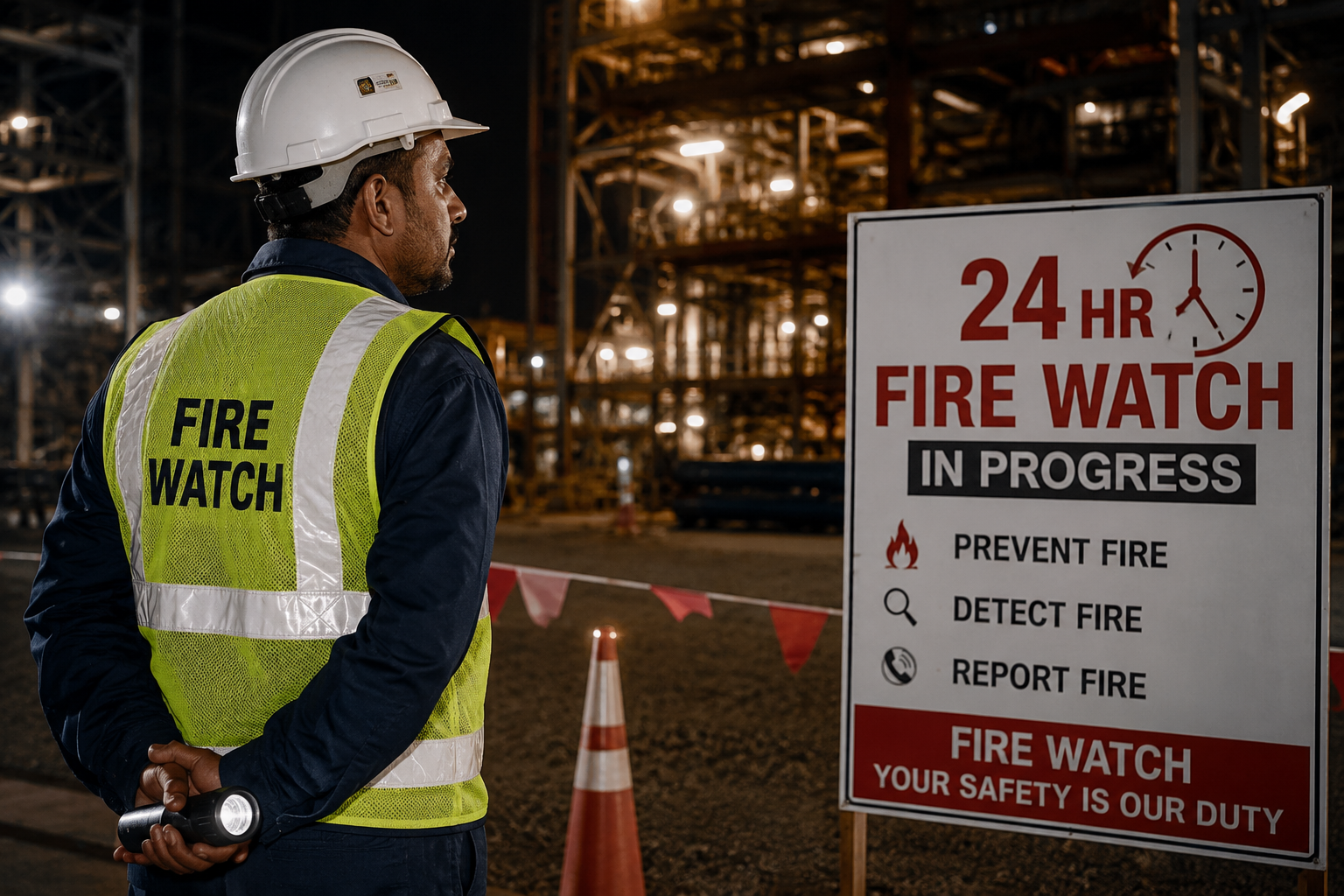

Fire watch assignments rarely begin months in advance. More often, they start with a phone call after something unexpected happens. A fire alarm stops working, a sprinkler system is shut down for repairs, or an inspector determines that temporary monitoring is necessary before a building can remain occupied.
Once that decision is made, every step that follows has a specific purpose. A professional 24 hr fire watch assignment is not simply about placing someone at a property. It is a structured process that continues until normal fire protection systems are back in service.
The Request Comes In
The first conversation usually focuses on understanding the situation rather than scheduling personnel immediately.
A provider may ask questions such as:
- Why is fire watch coverage needed?
- Which systems are unavailable?
- Is the property occupied?
- How large is the site?
- How long is the assignment expected to last?
The answers help determine how many guards may be required and how the assignment should be organized.
Sometimes the duration is known in advance. In other cases, coverage continues until repair work has been completed and approved.
Learning the Property
After arriving on site, guards spend time becoming familiar with the building before routine patrols begin.
This preparation often includes locating emergency exits, identifying restricted areas, reviewing access points, and understanding where maintenance or construction activities are taking place.
Every property presents different conditions.
A manufacturing facility may contain equipment that generates heat throughout the day. A hotel has guests moving through common areas at all hours. A warehouse may include large storage areas where visibility changes depending on the layout.
Understanding these differences allows patrols to reflect the property instead of following a standard route.
Regular Patrols Become the Priority
Once the assignment begins, inspections continue according to the required schedule.
The purpose of these patrols is not to complete a checklist as quickly as possible. Guards remain alert for changing conditions throughout every round.
During an inspection, they may observe:
- Smoke or unusual odors
- Blocked exits
- Improper storage of combustible materials
- Temporary electrical equipment
- Unsafe work practices
- Signs that require immediate attention
Each observation contributes to an overall picture of the property’s current condition.
Small changes that seem unimportant early in the day can become more significant later if left unaddressed.
Adjusting to Changing Conditions
Very few assignments remain exactly the same from beginning to end.
Construction projects move into new phases. Maintenance crews complete repairs in one section while beginning work in another. Occupancy levels change throughout the day, creating different priorities for patrols.
Instead of following identical routines, experienced fire watch personnel adjust as conditions evolve.
This flexibility helps maintain effective monitoring without overlooking areas where new risks may develop.
Working Until Repairs Are Complete
Fire watch coverage is temporary, but it remains active for as long as necessary.
Some assignments finish after a single evening once repairs have been completed successfully.
Others continue through multiple shifts over several days while replacement equipment is installed, tested, and approved.
Coverage generally remains in place until the building’s fire protection systems are fully operational again or local requirements no longer require temporary monitoring.
The length of the assignment depends on the property, the repairs being performed, and the circumstances that created the need for fire watch coverage.
The Final Walk Through
As an assignment comes to an end, the focus shifts toward confirming that temporary monitoring is no longer required.
Property representatives may verify that repairs have been completed, alarm systems are functioning correctly, or sprinkler protection has been restored.
Documentation from the assignment is also organized so building management has a record of the coverage provided during the temporary impairment.
Although the guards leave the property, the information gathered throughout the assignment continues to serve as an important record of the work performed. A 24 hr fire watch assignment follows a clear progression, beginning with an emergency request and ending only after permanent fire protection systems return to service.